Deburring machines / BR, BBR, BRB
Deburring
and Edge Rounding Machines
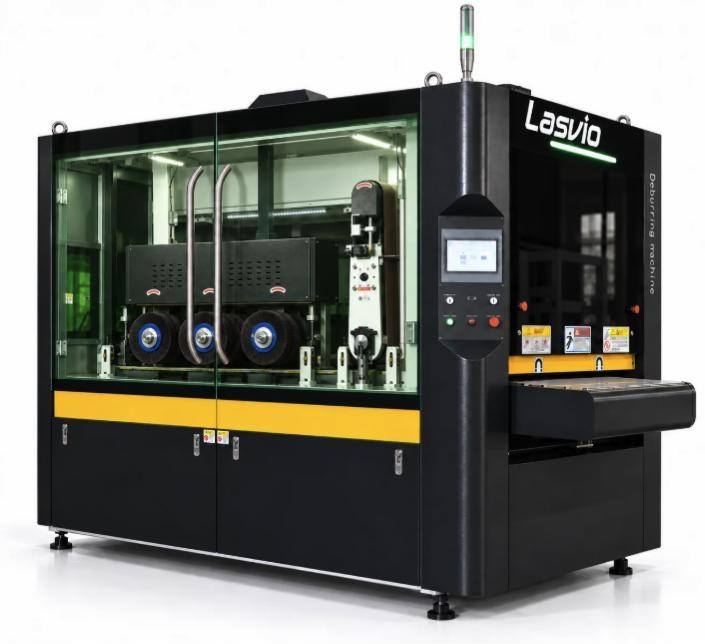
This is the machine most laser cutting shops need. An abrasive belt takes the burr off, a rotary brush rounds the edge, and the part comes out the other end ready to bend, weld or coat. One pass, one operator, the same result on every part.
Lasvio BR, BBR and BRB machines cover everything from everyday mixed sheet metal to heavy burrs and coating-ready finishes.
What hand deburring costs you
BR, BBR or BRB: which one
All three combine abrasive belt deburring with rotary brush edge rounding. The number of belts, and where they sit, decides how much burr the machine can remove and what the surface looks like afterwards.
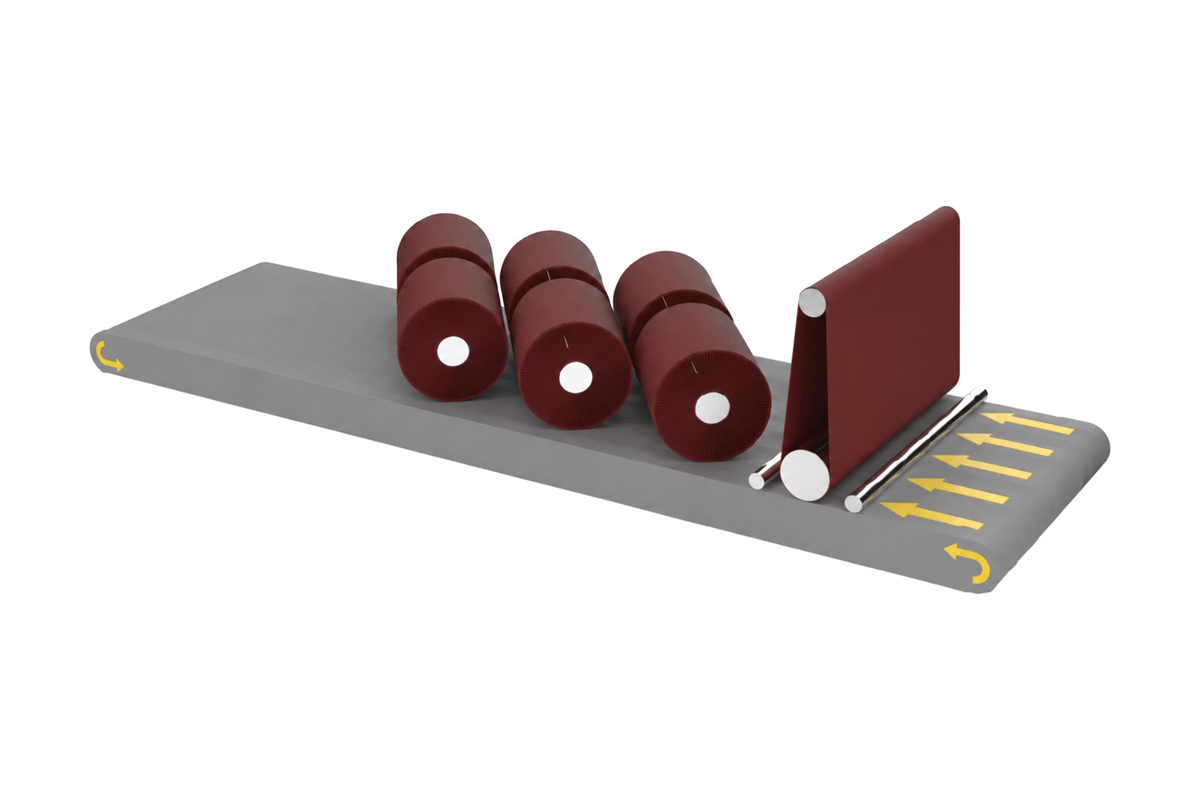
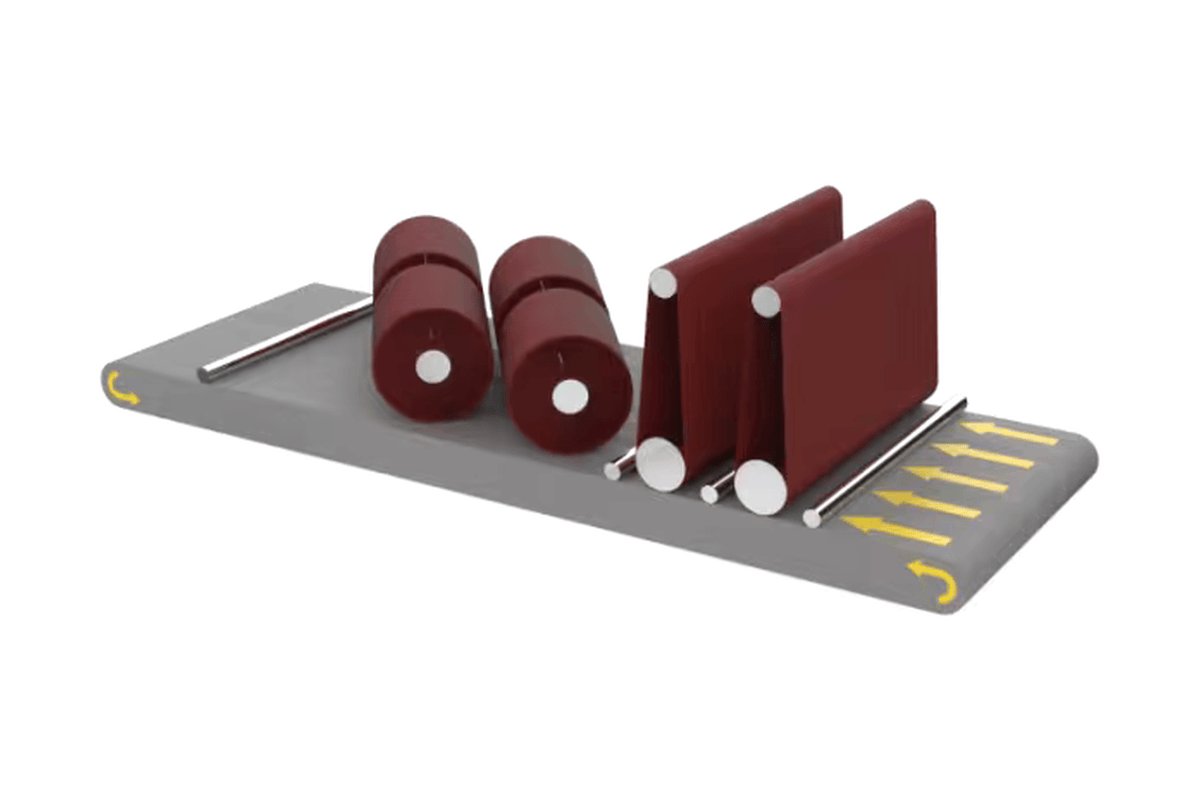
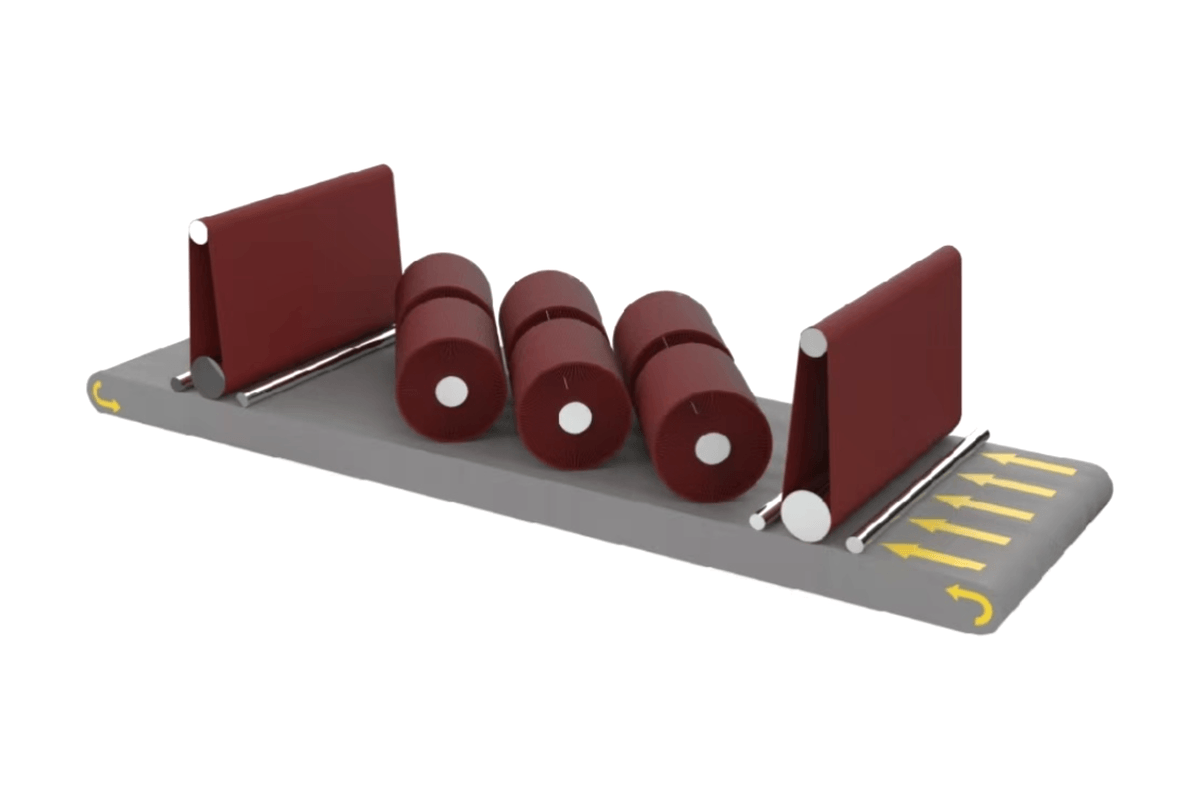
BBR and BRB have the same number of stations in a different order. BBR copes with harder slag and heavier burrs. BRB leaves the better-looking surface. We settle it by running your parts.
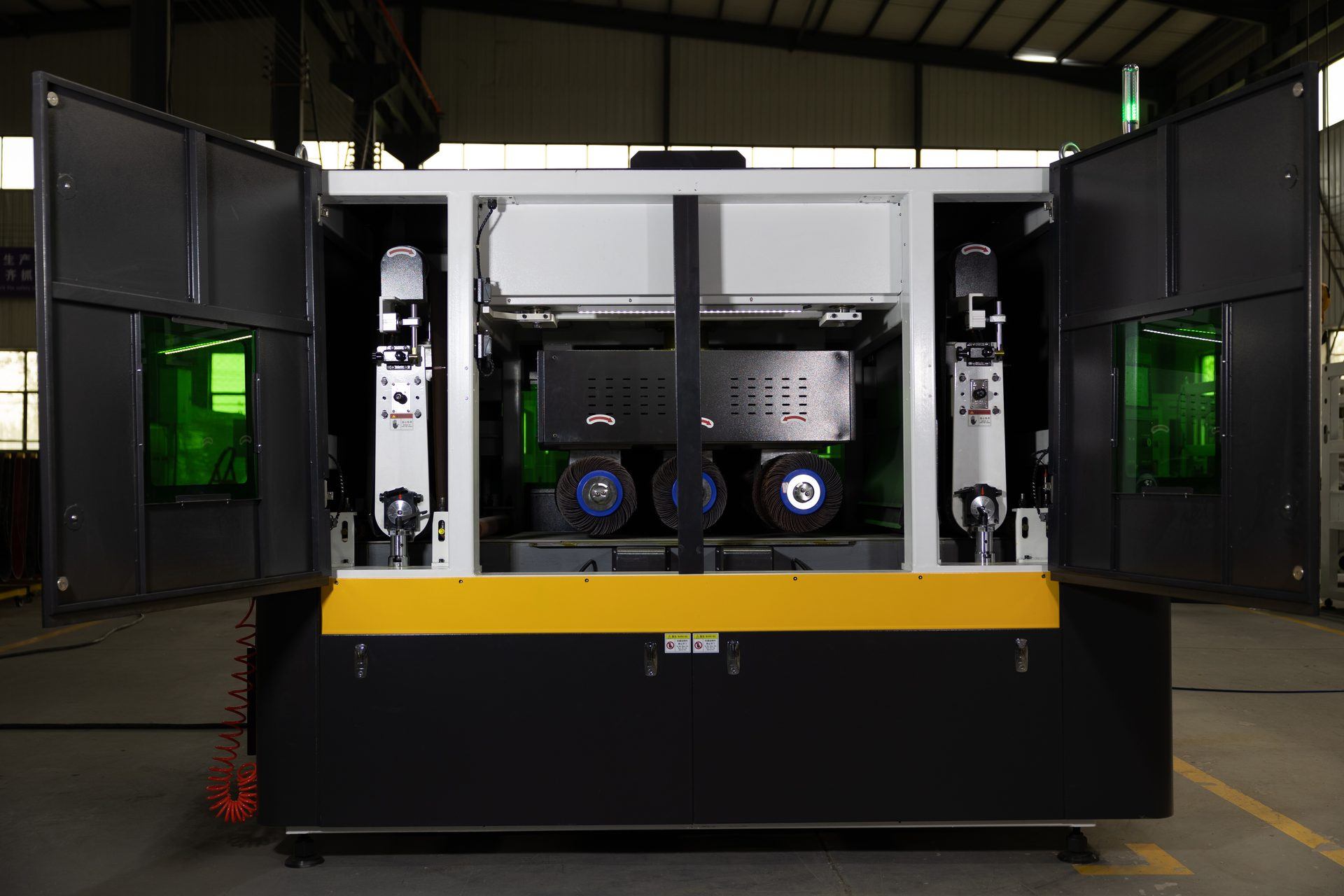
Inside a BRB
With the doors open you can see the three stations: an abrasive belt on each side and the rotary brush unit between them. Belts change from the side of the machine, so allow 1,000 mm of clearance there as well as at the infeed and outfeed.
Watch it run
Laser-cut spanner blanks through the belt and brush stations, before and after (16 s).
A small laser-cut washer held on the table and processed (36 s).
Specifications
| Specification | Detail |
|---|---|
| Working widths | 800, 1000, 1300 and 1600 mm |
| Part thickness | 0.5 to 80 mm |
| Minimum part size | 15 x 15 mm on the magnetic table; 50 x 50 mm on the vacuum table (solid sheet) |
| Feed speed | 1 to 5 m/min, adjustable |
| Abrasive belt speed | 5 to 13 m/s |
| Compressed air | 0.5 to 0.8 MPa |
| Power supply | 415 V, 3-phase, 50 Hz |
| Control | Siemens PLC and touch screen, closed-loop servo drive |
| Part holding | Magnetic table for carbon steel; vacuum table for stainless, aluminium, copper and other non-magnetic parts |
| Safety | Interlocked doors, emergency stops, air pressure and over-thickness alarms |
| Materials | Carbon steel, stainless steel, galvanised steel, copper, aluminium (with wet dust collection) |
| Warranty | Two years, with installation, training and service from our Melbourne workshop |
| Site planning | Allow 1,000 mm clearance at the infeed, outfeed and belt-change side. On the 1300, the wet dust collector and vacuum fan take the cell to about 4,640 x 4,600 mm of floor. Worktable height adjusts from 900 to 985 mm. |
Before and after
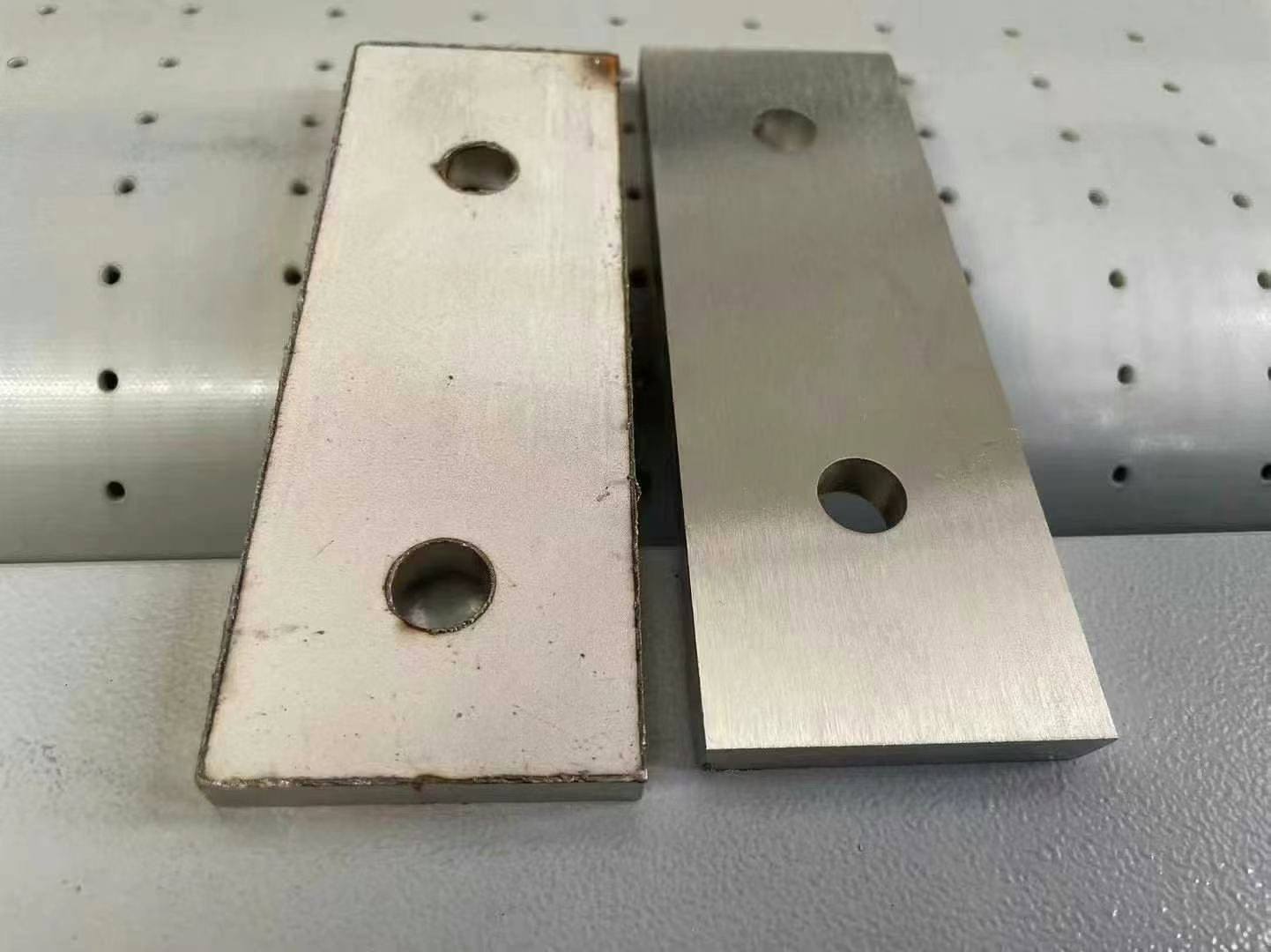
Carbon steel plate before and after burr removal and edge rounding.
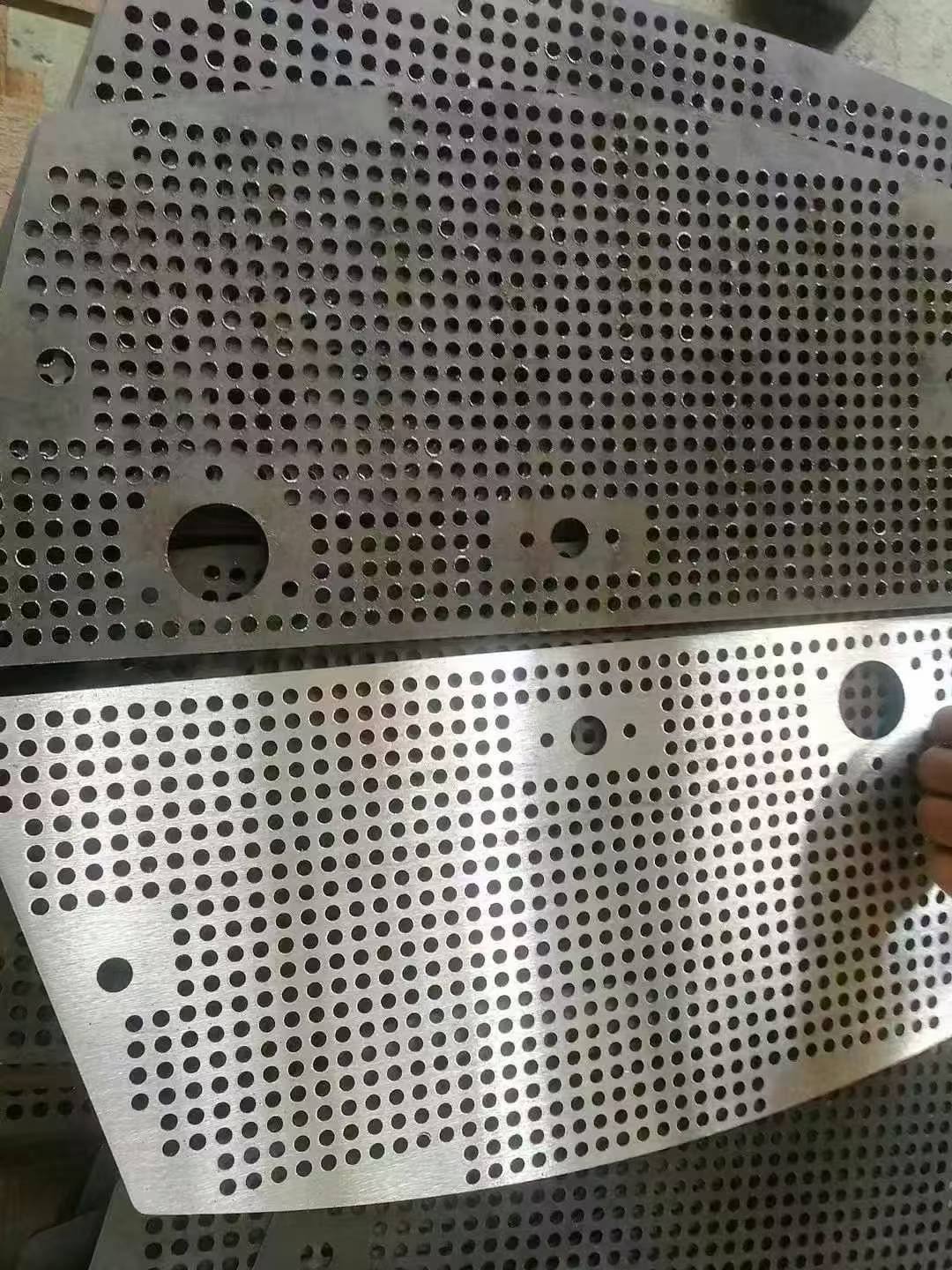
Laser-cut perforated carbon steel plate before and after deburring.
Standard models
| Model | Stations | Size L x W x H (mm) | Weight (kg) | Installed power (kW) |
|---|---|---|---|---|
| 800BRB / BBR | Two belts, rotary brush | 3,550 x 1,500 x 2,200 | 3,000 | 31.5 / 46.5 |
| 1000BBR / BRB | Two belts, rotary brush | 3,860 x 1,830 x 2,250 | 3,950 | 33.7 / 48.7 |
| 1300BBR / BRB | Two belts, rotary brush | 4,480 x 2,180 x 2,250 | 5,800 | 60.5 / 75.5 |
What we need to know to specify it
| Question | Why it matters |
|---|---|
| What kind of burr? | Laser dross, punching burrs and shear burrs come off differently |
| What edge do you need? | Safe to handle, coating adhesion, or a radius on a drawing |
| What do the parts look like? | Small parts, narrow features and cut-outs affect holding and brush access |
| How many, how often? | Batch size and mix set the working width and whether a return conveyor pays for itself |
| Which materials? | Non-magnetic parts need vacuum holding; aluminium needs wet dust collection |
Questions we get asked
Which model suits normal laser-cut burrs?
BR is the practical starting point for most shops. Move to a BBR if your burrs are heavier or more variable, and to a BRB if the surface after brushing needs another belt pass.
Can one machine run stainless, mild steel and aluminium?
Yes, with the right abrasives for each. Mixing steel and aluminium through one machine needs care with cleaning and extraction between materials, and we will set that up with you.
Can it handle different thicknesses in the same shift?
Yes, within the range of the machine. The over-thickness sensor stops the feed if a part is taller than the setting, which protects the rollers and belts.
How small a part can it hold?
15 x 15 mm on the magnetic table and 50 x 50 mm on the vacuum table. Vacuum holding needs solid sheet, so heavily perforated non-magnetic parts should be tested first.
Does it deburr both sides?
The machine works on one face per pass. Parts needing both faces are turned and fed through again, which is where the U-turn return conveyor earns its place.
One pass from the laser to the next operation.
Send us a mix of your typical parts. We will recommend the station sequence and working width, and show you the result before you commit.
Call 03 9796 3055 or email sales@industriallaser.com.au